



10 college degrees that will help you become an expat

This article covers:
- Top college majors to consider and its relevant career path options
- Nursing
- Computer Science / Data analysis
- Biomedical engineering
- Civil engineering
- Electrical engineering
- Mechanical engineering
- Business management
- Environmental science
- English
- Academic research
- So which is the best majors or bachelor’s degree to consider?
- Other things to consider as well for work abroad…
- Soft skills that matter
- Hard skills you shouldn’t ignore
- The reality of expat life
- Before you go…
- Use Instarem
Global labor statistics though stable still feels like it is short in supply. And if it’s this case in the domestic job market, you can imagine how it feels like on the international stage.
While the competitive job market seems a little depressing, the reality is certain countries and industries are still enjoying strong job growth. The only problem is the lack of talents. Now if you are college students looking to make change your majors or about to kick start your academic journey, you have to read on.
By the time you graduate, you might be able to enjoy slightly better job security and you are not limited to just the domestic markets. Plus you might even enjoy higher wage and a better career path.
Specifically, if you want to give yourself the best chance of becoming an expat, it pays to study the right major that have high job demands where you’re hoping to move.
Check out these top college degrees that will give you the skills and knowledge you need to work and live abroad.
Top college majors to consider and its relevant career path options
Here are the various majors to consider as your bachelor’s degrees
Nursing
Computer Science / Data analysis
Biomedical engineering
Civil engineering
Electrical engineering
Mechanical engineering
Business management
Environmental science
English
Academic Research
Nursing
Nursing is all about caring for people, promoting good health, and working hands-on in healthcare settings. Along the way, you’ll learn about human biology, medications, ethics, and evidence-based care plus get plenty of real-world clinical experience. Nurses are trained to care for patients at every stage of life and work closely with doctors and other healthcare professionals as part of a team.
Even though the pandemic feels like a chapter we’ve closed, one thing hasn’t changed: there’s still a global shortage of healthcare workers. Why? Aging population is one of the good reasons.
Hospitals and clinics around the world are actively looking for qualified nurses, which means job opportunities are wide open for aspiring nurse practitioners.
The good news? This high demand has pushed many healthcare facilities to roll out new training programs and education initiatives to attract and support new staff. For young people considering nursing, it’s actually a great time to jump in.
So yes, time to hit the books. If you’re looking for a career that’s in demand and getting plenty of attention, nursing might just be the move.
With a nursing degree and strong people skills, you can even take your career overseas. Registered nurses are needed everywhere- from hospitals and clinics to cruise ships and resorts that offer health services.
Of course, it all starts with the right qualifications. Earning a nursing degree is the first big step toward working abroad. If you’re able to study in the same country where you want to work, that can also make the visa process much smoother and faster.
Nursing might not be the ultra-high-paying career you once imagined, but it offers solid stability, great benefits, and plenty of room to grow within the healthcare industry. And with an aging global population, the demand for health services isn’t slowing down anytime soon.
One thing to keep in mind: if you plan to work abroad in public health or private practice, you may need to spend a year working in local facilities to relearn certain standards before qualifying for a work visa. It might sound tough, but compared to other fields, it’s still one of the easier paths to working overseas.
Common college degrees
Bachelor of Nursing (BN)
Bachelor of Science in Nursing (BSN)
Typical professional roles
Registered nurse (RN)
Clinical nurse specialist
Nurse educator
Nurse manager
Advanced practice nurse (with further study)
You might be interested in: Work visa Australia: 6 highest in-demand jobs
Computer Science / Data analysis
Computer science majors is arguably the original cool kids of the tech world. With their knack for solving complex problems and untangling tricky code, they’ve become essential in today’s workforce. Employers everywhere are constantly on the lookout for skilled programmers to join their teams.
Honestly, this isn’t surprising. As the world becomes more connected and tech-driven, the need for people who truly understand computers just keeps growing.
Within this field, data science is a major player. It focuses on collecting and analyzing huge amounts of data analytics to spot trends, patterns, and insights that help businesses make smarter decisions.
Students learn a mix of statistics, math, programming, machine learning, and data visualization – all while thinking carefully about data ethics. These analytical skills are valuable across industries like tech, finance, healthcare, and marketing.
Big data, when used well, can lead to some seriously innovative solutions.
So if you’re thinking about tackling new challenges and majoring in computer science, why not go for it? With so many exciting roles waiting to be filled, you could be the next tech wizard making waves and building a successful career while you’re at it.
That said, if your goal is to work abroad with employer sponsorship, you’ll need to be a top-tier programmer. Experience at major companies like FAANG (Facebook, Apple, Amazon, Netflix, Google) or similar firms can really help.
Common college degrees
BSc in Data Science
BSc in Computer Science (Data Science track)
BSc in Statistics
BSc in Applied Mathematics
BSc in Business Analytics
Typical skilled professionals’ career path
Data analyst
Budget analysts
Data scientist
Machine learning engineer
Business intelligence analyst
Product / growth analyst
Biomedical engineering
This sits right at the crossroads of engineering, biology, and medicine. In simple terms, it’s about using engineering skills to create technologies that make healthcare better. Students learn about things like medical devices, imaging equipment, biomaterials, and biomechanics. In short, basically the tools and tech that help doctors diagnose, treat, and care for patients.
If that description feels a bit heavy, don’t worry, you’re not alone. Think of it this way: if engineering is like building with LEGO, biomedical engineers use those LEGO skills to design and fix the tools doctors use every day. It’s not just health sciences, and it’s not just engineering. it’s a smart mix of both logic and medicine.
Some of the most life-changing biomedical research come from this field. X-ray machines, ultrasound scanners that let parents see their baby before birth, and other medical imaging tools? Yep, biomedical engineers had a hand in those. They also help maintain hospital equipment, make sure systems are running safely, and even invent entirely new devices to improve healthcare services.
Just like nursing, the demand for biomedical engineers is growing as healthcare services expand worldwide. If you’re excited by the idea of technological advancements and solving real-world health sciences problems, this is a great major to consider. The skills you gain can open doors not only locally, but internationally as well.
Common college degrees
BEng / BSc in Biomedical Engineering
BEng in Bioengineering
BSc in Medical Engineering
Typical career path
Biomedical engineer
Medical device designer
Clinical engineer
R&D engineer (healthcare)
Regulatory affairs specialist
Civil engineering
So what is civil engineering, really? If you ask around, you’ll probably hear things like editing specs, writing reports, doing fieldwork, dealing with unhappy contractors, and managing confused clients. And sure that’s all part of the job. But at its core, civil engineering is about something much bigger.
Civil engineers are the planners, designers, and builders behind the physical world we live in. While architects focus on how a structure looks and functions, civil engineers make sure it actually stands strong, stays safe, and lasts for generations. The roads you drive on, the bridges you walk across, the highways that connect cities, civil engineers are behind all of it.
Civil engineering focuses on designing, building, and maintaining the infrastructure that keeps modern society running. This includes buildings, roads, bridges, water systems, and transportation networks. Students learn about structural safety, sustainability, project management, and regulations, all while tackling real challenges like urban growth and environmental impact.
Common college degrees
BEng / BSc in Civil Engineering
BEng in Structural Engineering
BEng in Construction Engineering
Typical professional roles
Civil engineer
Structural engineer
Construction project manager
Urban infrastructure planner
Site engineer
Electrical engineering
We’re so surrounded by technology these days that it’s easy to forget there’s real engineering magic happening behind the scenes and that’s where electrical engineers come in.
If your day involves electricity, connectivity, or automation (spoiler: it does), an electrical engineer had a hand in making it work. Still not convinced? Think about it.
From your smartphone’s battery and screen to wireless charging and Wi-Fi routers, electrical engineers design the systems that move power and information often invisibly. Every screen you look at and every smooth digital experience you have relies on their work.
They also make sure electricity is delivered safely, from the wiring inside your walls to traffic lights that keep roads running smoothly. Smart homes, renewable energy systems, communication networks, you name it. Electrical engineers are the quiet architects of our connected, electrified world.
In short, this engineering focuses on electricity, electronics, and electromagnetic systems. Students study circuits, power generation and distribution, control systems, and communication technologies. The technical knowledge behind everything from clean energy and telecoms to automation and computing hardware.
Common bachelor’s degrees
BEng / BSc in Electrical Engineering
BEng in Electrical & Electronic Engineering
BSc in Electronics Engineering
Typical professional roles
Electrical engineer
Electronics engineer
Power systems engineer
Control systems engineer
Hardware design engineer
Mechanical engineering
Want to see mechanical engineering in action? Just look at something like a Dyson hair dryer- it pushes out powerful hot air without overheating. Or think about your car: the engine, brakes, air conditioning, transmission all working together in perfect balance. That’s mechanical engineering doing its thing, often without us even noticing.
At its core, mechanical engineering is about understanding motion, force, and energy, and using that knowledge to solve real-world problems. It’s innovation you can see, touch, and rely on every day.
Mechanical engineering focuses on designing, analyzing, and manufacturing machines and mechanical systems. Students dive into mechanics, thermodynamics, materials science, and fluid dynamics, and apply those skills across industries like automotive, aerospace, robotics, and energy.
So if you’re interested in building machines, working on aircraft, or developing solutions for complex mechanical systems, this is absolutely the field to be in.
Common college majors
BEng / BSc in Mechanical Engineering
BEng in Mechatronics
BEng in Manufacturing Engineering
Typical professional roles
Mechanical engineer
Product design engineer
Manufacturing engineer
Automotive / aerospace engineer
Robotics engineer
Business management
Business management is kind of the classic college major especially if your goal is to work abroad. For years, it’s been the go-to choice for parents who want their kids to pursue something closely tied to money and career stability.
That said, the field became crowded for a while, especially in areas like marketing, which lowered overseas demand. But now, business management is making a comeback and the reason is pretty straightforward: flexibility. With AI, machine learning, and automation changing the job market so quickly, having just one narrow skill set can limit your options. Business degrees, on the other hand, give you a broader foundation.
This college degree focuses on how organisations run, grow, and compete both locally and globally. Students learn about strategy, finance, marketing, operations, leadership, and how people and teams work together. The goal is to help you understand business challenges, make smart decisions, and manage resources effectively in fast-changing environments.
What this means is that whether you’re interested in finance, operations, marketing, or supply chain management, this degree gives you the core skills to work in almost any industry. The main thing you’ll need to pick up later is industry-specific knowledge which, honestly, is much easier to learn when you already have a strong solid foundation.
The biggest challenge right now is competition. As global work trends continue to shift, business roles remain popular, and work-abroad opportunities can be limited. Still, for those who value versatility and long-term adaptability, business management remains a solid choice.
Common college majors
BBA (Bachelor of Business Administration)
BSc in Business Management
BSc in Management Studies
BCom (Business / Management)
Typical professional roles
Business analyst
Management consultant
Operations manager
Product manager
Marketing or sales manager
Entrepreneur / startup founder
Environmental science
Think of Earth as one big, living system and environmental scientists as the people keeping an eye on its health. They’re a bit like doctors for the planet, figuring out what’s going wrong, why it’s happening, and how we can fix it.
At the core of it, environmental scientists help tackle issues like pollution, climate change, and resource depletion so our planet stays livable for future generations.
This field looks at how nature and human activity interact, with sustainability front and center. You’ll study things like ecology, climate change, resource management, and environmental policy, while also considering social and economic impacts. Along the way, you’ll learn how to assess environmental risks, plan at a regional level, and come up with solutions to big global problems like biodiversity loss.
Day to day, the work is pretty varied. One day you might be out in the field collecting air, water, or soil samples. Another day you’re in a lab or office, analyzing data to spot pollution trends or changes in ecosystems, and figuring out what those changes mean for both the environment and public health.
Because environmental issues affect everyone, you’ll often work closely with government agencies, ensuring regulations are followed, shaping evidence-based policies, and explaining complex findings to policymakers, businesses, and the public in ways that actually make sense.
At the end of the day, environmental scientists play a huge role in building a more sustainable future. It’s really a global work. Their work helps make sure progress doesn’t come at the planet’s expense and that’s a pretty big deal.
Common bachelor’s degrees
BSc in Environmental Science
BSc in Environmental Studies
BSc in Environmental Management
BSc in Ecology
Typical professional roles
Environmental consultant
Sustainability analyst
Conservation scientist
Environmental policy officer
ESG / sustainability manager
English
English is all about language, literature, and communication, with a strong focus on critical thinking and clear expression. Students explore literary works from different time periods and cultures while sharpening their writing, interpretation, and argument skills. Many programmes also branch into linguistics, media studies, and creative or professional writing, which opens doors to a wide range of careers.
It’s no secret that English is one of the most widely spoken languages in the world. Around 1.5 billion people speak it either natively or as a second language. And that high demand translates into plenty of opportunities, especially if you’re interested in teaching English abroad.
With qualifications like TEFL or TESOL, there are tons of work abroad programs like JET that let you work overseas, get paid, and experience a new culture at the same time. It’s a great way to travel while building your career.
Here’s the interesting part: you don’t always need an English degree to teach English. Thanks to the global demand for instructors, related qualifications (like teaching certificates, journalism diplomas, or literature degrees) can also get you through the door. Relevant experience, volunteering, internships, and additional certifications can boost your chances too.
Just keep in mind that international schools and ESL programs often offer higher salaries if you have stronger qualifications or more teaching experience. The more you bring to the table, the better the opportunities for a job abroad.
Common college majors
BA in English
BA in English Literature
BA in Linguistics
BA in Creative Writing
BA in Professional / Technical Writing
Typical professional roles
Content writer / editor
Journalist
Communications or PR specialist
Marketing strategist
Copywriter
Teacher / lecturer (with further qualification)
You might be interested in: JET Program: Everything you need to know about the program
Academic research
Academic research is all about digging deep into a specific field and contributing new knowledge. It involves research design, data collection, analysis, and academic writing, with a strong emphasis on critical thinking and intellectual discipline. Students learn how to work independently and collaboratively, often publishing their findings and contributing to ongoing conversations in their field.
If working abroad and traveling the world sounds like your dream, academic research might be worth a serious look.
It’s definitely not the easiest path. Let’s be real, earning a PhD takes time, patience, and a lot of persistence. But if you’re up for the challenge, the rewards can be huge. English is commonly used in universities around the world, which means fewer language barriers and more international opportunities, even in highly specialized fields.
So maybe it’s time to finally go for that higher college degrees you’ve been putting off. Who knows? You could end up building an academic career that takes you all over the globe.
Common bachelor’s pathways
BSc or BA in a specific discipline (e.g. Physics, Biology, History)
Often followed by Honours, Master’s, or PhD
Typical professional roles
Research assistant
Academic researcher
University lecturer / professor
Policy researcher
Think-tank or institutional analyst
So which is the best majors or bachelor’s degree to consider?
Honestly, the best major is one that does more than just help you land a job close to home. It should give you solid foundational skills, open doors both locally and internationally, and stay relevant for years to come.
At the end of the day, it also has to be something you’re genuinely interested in, something you can see yourself doing well in. The world is changing fast, and no degree is completely “future-proof.” The real key is choosing a field that prepares you to adapt, keep learning on the job, and stay close to new technologies and trends. No work abroad program is perfect, but the more flexible you are, the better your chances.
Other things to consider as well for work abroad…
Learning a new language will pay off
If you’re planning to study or work overseas, learning the local language can be a total game-changer. It opens doors you didn’t even know were there. Not only can it boost your chances of getting hired, but it also helps you settle in faster and even score better local deals (yes, haggling included).
The funny part? Your friends might think you’re just casually learning a few foreign phrases, when in reality, you’re building a skill that can seriously upgrade your travel and career opportunities.
So if learning a new language doesn’t sound exciting at first, try thinking about all the experiences it can unlock instead. It’s one of those skills that keeps paying off.
Consider getting a double major
We’re not saying you need to run yourself into the ground just to be competitive but a double major can give you more flexibility and an edge compared to your peers. The trade-off, of course, is a bigger investment in time, money, and energy. Long hours, higher stress, and heavier workloads are part of the deal.
If you can handle it and see the value, though, it might be worth it in the long run.
Beyond knowledge, you need soft and hard skills
Let’s be real: the world is moving faster than ever. To survive not just now, but in the future job market. You’ll need high demand skills that go beyond textbooks and technical know-how.
Soft skills that matter
Cultural intelligence (CQ)
Adaptability and flexibility
Resilience and emotional control
Cross-cultural communication
Emotional intelligence (empathy, self-awareness)
Open-mindedness and curiosity
Humility and willingness to learn
Relationship-building and networking
Managing conflict across cultures
Independence and self-motivation
Hard skills you shouldn’t ignore
In-demand technical or professional knowledge
Critical thinking
Language skills (even basic proficiency helps)
Cross-border or international work experience
Remote and hybrid collaboration tools
Understanding visas and work permits
Basic tax and legal knowledge
Financial planning and budgeting
Digital literacy (banking, government portals, tools)
Knowledge of the local market and industry
Contract and employment basics
The reality of expat life
As more countries focus on developing local talent, landing a high-paying job abroad is getting tougher. And while global work-abroad programs can help ease the transition, expat life isn’t easy.
Living and working overseas tests more than your professional skills. It challenges you as a person. You’re not just adapting to a new job, but to a new culture, system, and way of life. It’s rewarding, yes but it takes resilience, patience, and a willingness to grow.
If you’re ready for that challenge, though, the experience can be truly life-changing.
Before you go…
Thinking of studying abroad? It’s an exciting prospect – a new culture, new challenges, friends and experiences. But don’t forget the most important thing: moving your hard-earned money in a way that is fast, safe and affordable.
College students, if you think your plans for the future involve a lot of passport stamps, then Instarem is the perfect partner in crime.
Use Instarem
Instarem helps you send money abroad to over 50 countries. If you’re looking for an easy and affordable way to send money to your family or friends or even for business transactions, Instarem is the perfect solution.
When it comes to overseas money transfers, exchange rate volatility is not the only loss-inducing factor. Such transactions can involve hidden costs and telegraphic transfer (TT) fees which can increase the burden on the sender.
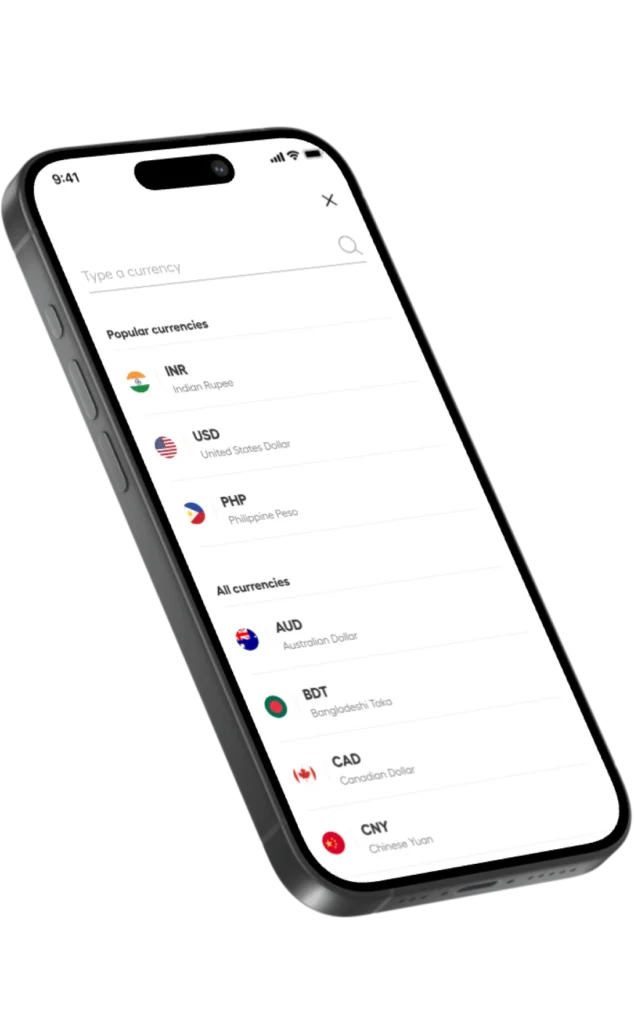
That’s why you should consider using Instarem to facilitate low fees, competitive FX rates and fast money transfers.
With our simple platform, you can make a transfer in just a few clicks. Plus, we offer competitive rates and low fees so you can get the most out of your money.
Download the app, sign up on the web,create a business account and see how easy it is to send money with Instarem.